

Johnson House
‘We will always have STEM with us. Some things will drop out of the public eye and will go away, but there will always be science, engineering and technology. And there will always, always be mathematics.“

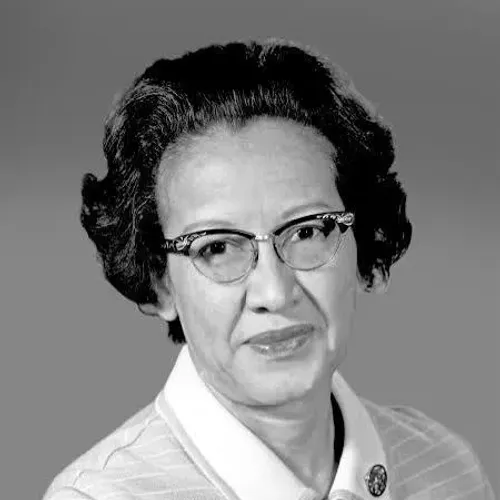
Katherine Johnson was born in 1918 in White Sulphur Springs, West Virginia. Her keen interest in numbers propelled her through school, and by age 13, she was attending high school on the campus of West Virginia State College, a historically black institution. At 18, she enrolled in the college itself, excelling in mathematics and finding mentorship under W. W. Schieffelin Claytor, the third African American to earn a PhD in math. She graduated in 1937 with highest honours and began teaching at a black public school in Virginia. In 1939, West Virginia began integrating its graduate schools, and Johnson, along with two men, became the first black students admitted to West Virginia University. The Soviet launch of Sputnik in 1957 altered the course of her career. In 1958, she contributed to the Notes on Space Technology, which laid the groundwork for NASA’s space program. Johnson went on to calculate trajectories for Project Apollo’s Lunar Module and worked on the Space Shuttle and Earth Resources Technology Satellite (ERTS, later renamed Landsat). She authored or coauthored 26 research reports and retired in 1986 after 33 years of service.